
Building the Roadmaps
Scaffolds That End the Classroom Power Struggle (Part 2)

If student disengagement is often connected to lagging skills rather than simple apathy, then the next question becomes: what do we actually do about it?
This is the part of the conversation that matters most to me because understanding students is important, but students also need tools. Compassion without structure does not help struggling learners succeed. Scaffolding is how we hold the line. True empathy means keeping the academic bar high, but building a massive, sturdy ramp to help them reach it.
One of the biggest barriers I see is that students often do not know what success looks like. We hand them an assignment and assume they understand the expectations, the academic language, the organization, and the thinking process required to complete it. Many do not.
Clear Criteria Lowers Cognitive Load
This is one of the reasons I believe so strongly in student-facing rubrics and clear success criteria.
If we want students to produce quality work, we need to explicitly show them what quality work looks like. A strong rubric reduces uncertainty and lowers cognitive load. It gives students a roadmap instead of asking them to navigate blindly.
Research on motivation consistently shows that students are more likely to engage when tasks feel achievable. Clarity increases confidence. Confidence increases persistence.
I use standards-based, WIDA-aligned rubrics regularly with my students because multilingual learners especially benefit from explicit language around expectations and skill development.
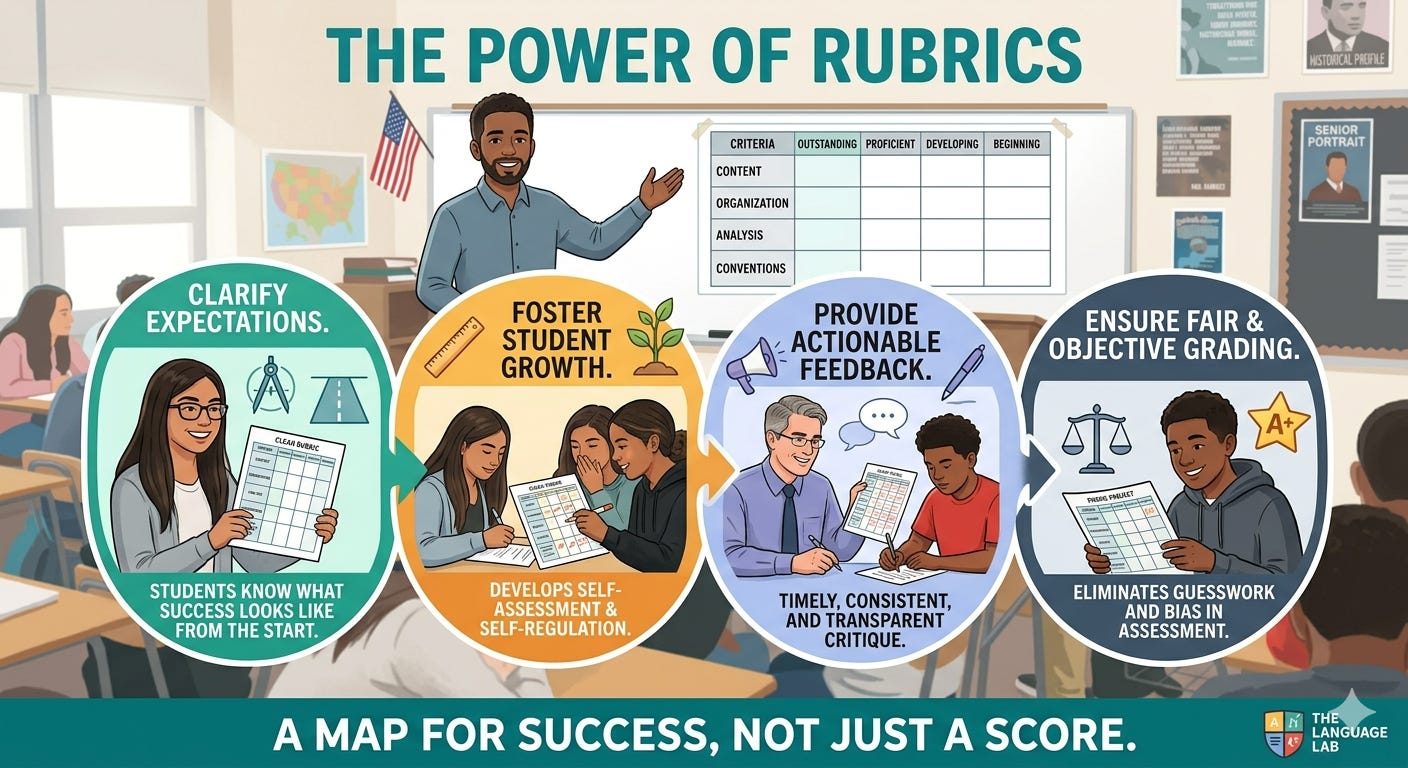
A strong, student-facing rubric lowers cognitive load by giving students a clear roadmap for success instead of forcing them to navigate blindly.
Leveraging Tech for Sustainability
Writing effective rubrics can be difficult and time-consuming, and to protect my own professional boundaries and energy, I look to digital tools for help. AI tools have been incredibly useful for me in this process. I have used both Gemini and ChatGPT to help generate initial rubric drafts and organize ideas before refining them to fit my students’ unique needs.
Another major barrier is language itself. Sometimes students are not refusing to complete a task because they do not understand the content. They are refusing because they do not yet have the academic language necessary to express their thinking.
This is why I believe so strongly in sentence frames, explicit modeling, and opportunities for structured discussion. These supports are often associated with multilingual learners, but the reality is that many students benefit from explicit support with academic vocabulary, sentence structure, and formal writing conventions.
These supports are not “cheating.” They are scaffolds. A sentence frame does not remove thinking from a task; it removes unnecessary linguistic barriers so students can focus their cognitive energy on the skill we are actually trying to teach.
Building Academic Endurance
The same is true for modeling. Many students need to see the process before they can attempt it independently. We sometimes forget that confidence is built through successful experiences, not repeated frustration.
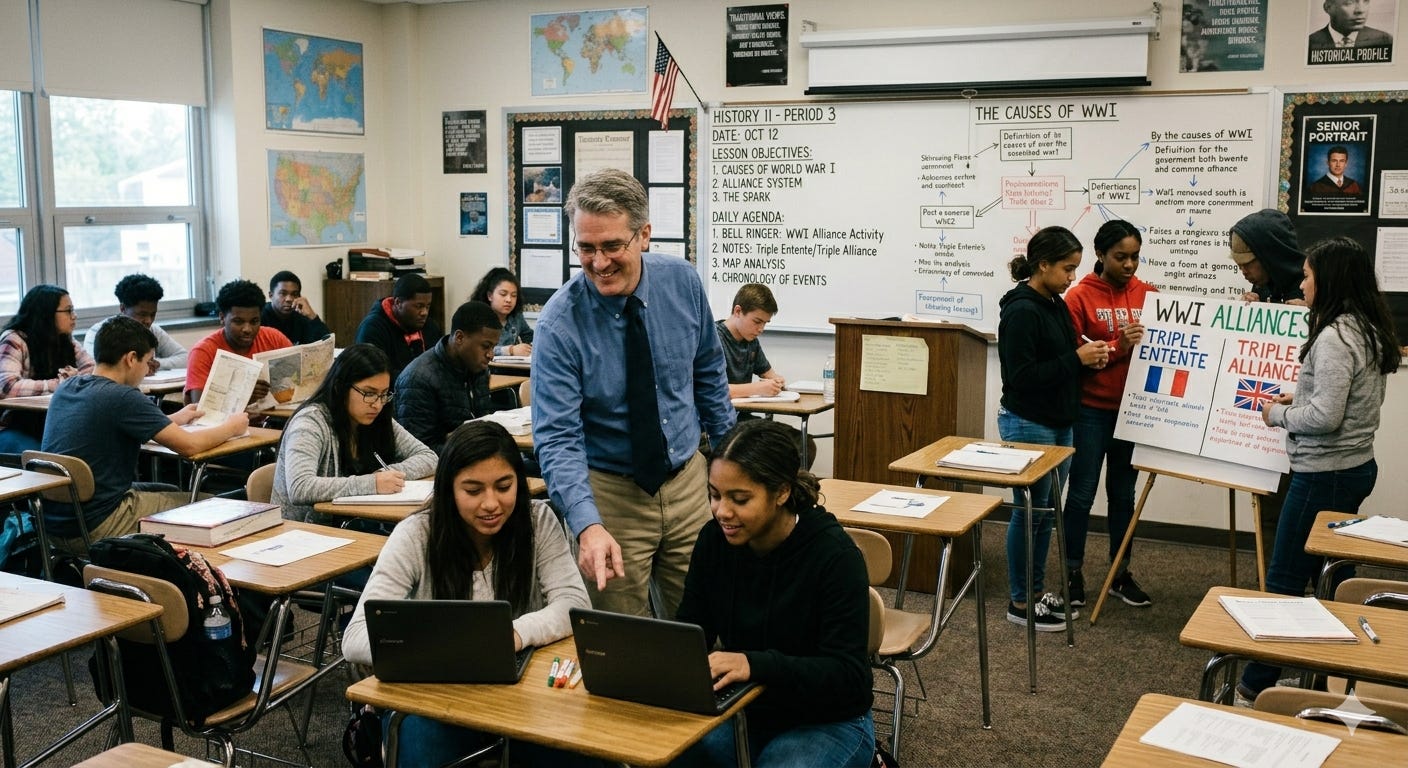
Image Generated by Gemini AI
When we introduce these tools, we completely disarm the classroom power struggle. When a student defaults to task refusal and says, “I’m not doing this,” and we respond by breaking down the barrier—handing them a tailored sentence frame or showing them the exact model—the conflict begins to lose steam. We aren’t fighting their will; we are supporting their skill.
We also need to think about stamina the same way we think about physical endurance. Students often need gradual practice sustaining focus and productive struggle. That means chunking tasks into manageable pieces. Instead of handing a struggling reader a multi-page text and expecting an immediate summary, we might start by asking them to read three specific sentences and highlight a single key piece of evidence. We build reading endurance slowly, creating opportunities for students to experience success before increasing complexity.
Most importantly, I think students need adults who believe they are capable.
Part of my job as a teacher is helping students see themselves as successful learners, especially when they have already decided they are not. I want my students to know that struggle does not mean inability. I want them to understand that academic skills can be developed and strengthened over time.
High expectations and empathy are not opposites. In fact, I would argue that the most effective classrooms are built on both. Students deserve accountability, but they also deserve support, clarity, and instruction that recognizes the very real barriers many of them are carrying into school each day.
When we stop viewing disengagement as a character flaw and start viewing it as information, we become much more effective at helping students move forward.
What’s your go-to? We know there are no quick fixes, but building a sturdy ramp for our students matters. Which of these structures—rubrics, explicit modeling, or chunking—makes the biggest difference in your classroom?
Next Week on the Blog: I’m taking this out of the realm of theory. I’m going to open up my plan book and show you exactly how I used these scaffolds in a recent essay project with my kids. All readers will get the full planning process and strategic breakdown. For my paid subscribers, I will also be sharing the download link for the exact student-facing rubrics, graphic organizers, and materials I gave to my students so you can drop them straight into your own classroom.
Join the Lab: The Language Lab is shifting to a subscriber-supported model so I can keep pouring time into creating deep, actionable resources. If this work helps you protect your energy and support your students, consider upgrading to a paid subscription this week to unlock next week’s resource vault. Either way, I am so incredibly grateful you are here on the trail with me.
I want to share something one of my high school teachers did:
The teacher invited two business executives to the classroom and asked them to explain the consequences of not reading and writing properly (something that was a concern regarding some seventh-grade students!). These executives shared their experiences filling out job applications, signing contracts, and giving presentations. They went through all sorts of humiliating situations and were denied better positions and salaries! That was enough to motivate struggling students to improve their reading and writing skills.